
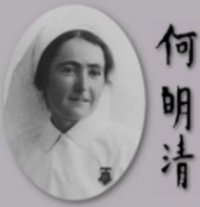
Kathleen Hall was a New Zealand missionary nurse in China who worked in poor rural areas under extremely difficult conditions, and trained local nurses to work alongside her. She was also swept up in the war against Japan. Not only did she nurse the sick and wounded, but time and time again she smuggled medical supplies through the Japanese lines to Dr. Norman Bethune, the Canadian surgeon who was in charge of medical services for the Chinese 8th Route Army.
The He Ming Qing Memorial Scholarship was established in her honour by the New Zealand China Friendship Society Inc. to provide a three-year/four-year scholarship for Chinese girls from poor rural areas enabling them to complete nursing training in order to return to their villages and work for improved health standards. This scholarship replaces the previous Kathleen Hall Centennial Memorial Scholarship.
2006 – Present He Mingqing Scholars
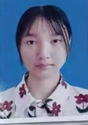
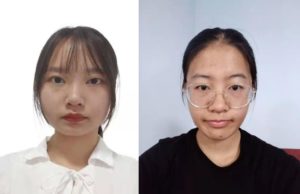
2021 -2025 Xiang Yuxuan 向雨萱. From Yang Temple Village, Ning Qiang County, Shaanxi Province 陕西省汉中市宁强县胡家坝镇杨寺庙村 Was admitted to Xi’an Medical College in 2021, studying nursing.
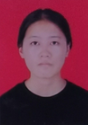
2021 -2025 Huang Lixia 黄丽霞. From Qiaoxue Village, Wanrong County, Yuncheng City 山西省运城市万荣县里望乡乔薛村 Was admitted to Shanxi Datong University in 2021, studying in nursing.
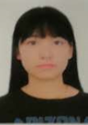
2019 – 2023 Wu Baoyi 吴宝怡. From Yihe Village, Baihe County, Ankang City, Shaanxi Province陕西省安康市白河县茅坪镇义和村. She is currently studying at Xi’an Medical College.
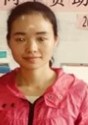
2017 – 2021 CHEN Yuan 陈媛. From a mountainous rural area in Zhen An County, Shangluo District, Shaanxi Province陕西省商洛地区镇安县. Scholarship supported her to complete a nursing degree from Xi’an Medical College.
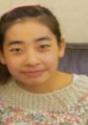
2012 – 2016 WANG Xuejun 王学君. From Shandan, Gansu Province甘肃省山丹县. Scholarship supported her to complete a nursing degree from Jiangxi Institute of Technology. Completed her secondary school from Peili School (培黎学校)

2012 – 2016 ZHU Caixia 朱彩霞. From a village of Shandan County, Gansu Province甘肃省山丹县. Scholarship supports her to complete her study in Jiangxi Institute of Technology, with a major in nursing.

2010 – 2014 WANG Shuizhen 王水珍. From Feng Xian County, Baoji District, Shaanxi Province陕西省宝鸡地区凤县. Scholarship supported her to complete a nursing degree from Northwest Minorities University in Lanzhou.

2009 – 2013 SHI Hongli 史鸿丽. From a small village in Minle County, Zhangye City, Gansu Province甘肃省张掖市民乐县. Scholarship supported her to complete a degree from Gansu Medical University, Nursing Studies.
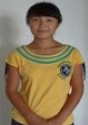
2008 – 2011 SHEN Qianqian 申倩倩. From a village in the mountains of She County, Handan City, Hebei Province河北省邯郸市涉县. Scholarship supported her to complete a degree from Hebei University, majoring in nursing.
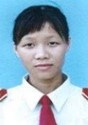
2006 – 2010 WEI Yunjie 韦云洁. From Chuan Shan, Huanjiang County, Hechi City Guangxi 广西壮族自治区河池市环江县川山镇. Scholarship supported her to complete a degree from Guangxi Medical University.
He Ming Qing Memorial Scholarship news